
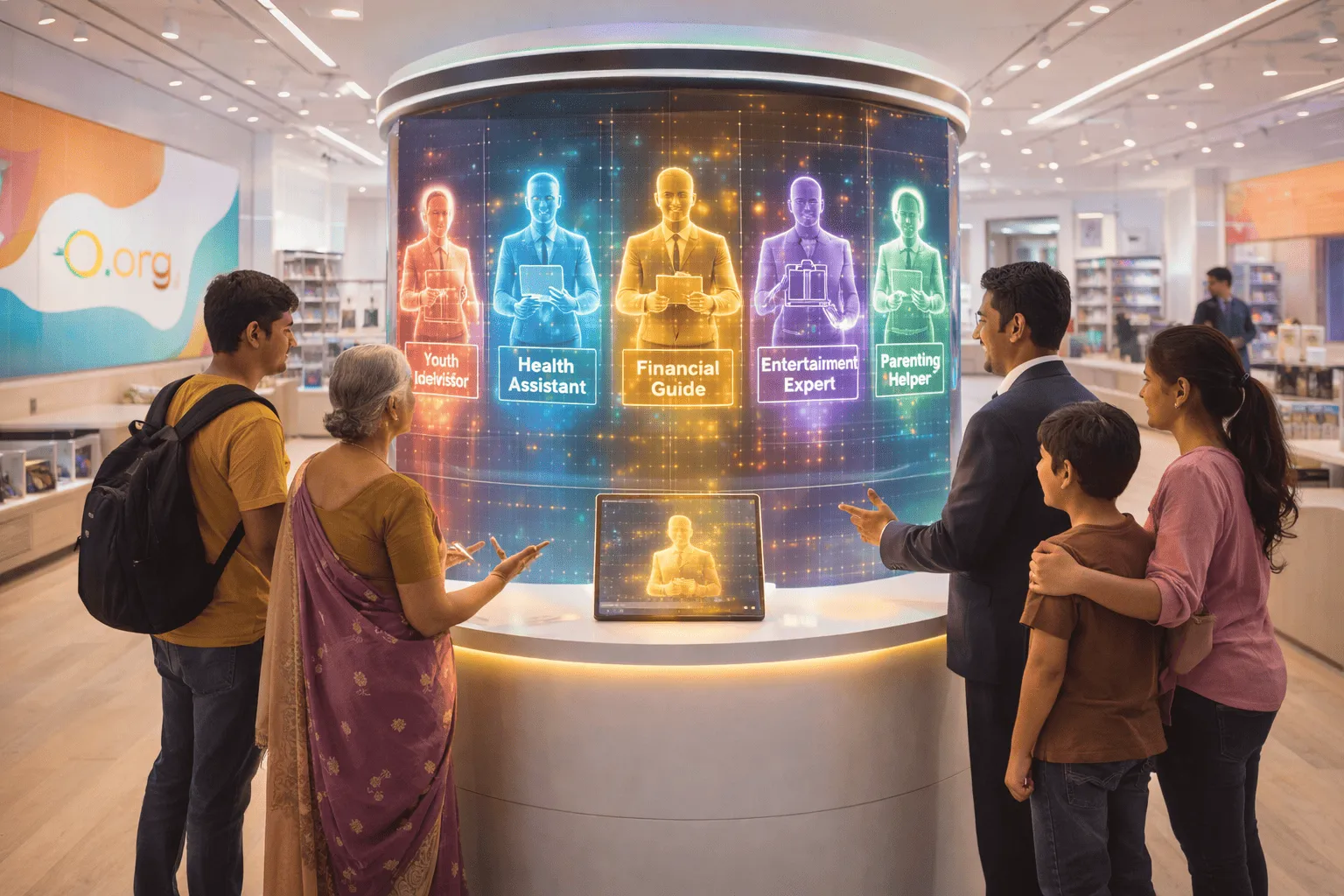
One Audience Is No Longer the Reality
Brands don’t serve a single type of user anymore.
They serve a mix.
Different age groups. Different levels of experience. Different expectations. Different goals.
A first-time visitor may just be exploring.
A returning user may want something specific.
A technical user may look for depth.
A casual user may want simplicity.
Trying to serve all of them the same way creates gaps.
Some feel overwhelmed. Some feel underserved. Some simply leave.
This is where a Multi-Persona AI Platform for All Your Questions starts to make a difference. It allows brands to respond differently based on who the user is and what they need.
Diversity Is More Than Demographics
When we talk about diverse audiences, it’s not just about demographics.
It’s about behavior.
Two users from the same background can still expect completely different experiences.
One might prefer detailed explanations.
Another might want a quick answer and move on.
So the real challenge is not identifying users.
It’s adapting to them in real time.
A multi-persona approach focuses on that adaptability.
Why One Communication Style Fails
Most platforms still rely on a single communication style.
Every answer looks similar.
This creates friction.
A beginner may struggle with technical language.
An expert may get slowed down by long explanations.
Neither experience feels right.
A multi-persona system solves this by adjusting tone, structure, and depth.
This makes communication more effective.
Matching Responses to User Intent
Intent is key.
Two users can ask the same question but expect different outcomes.
“How do I use this?”
One wants guidance. Another wants confirmation.
If the response does not match the intent, it feels off.
A multi-persona system focuses on understanding that intent.
It delivers answers that align with the purpose behind the question.
Making Every User Feel Understood
One of the biggest drivers of engagement is feeling understood.
If users feel like the platform “gets” them, they stay.
If not, they disengage.
A Multi-Persona AI Platform for All Your Questions helps create this sense of understanding.
It adapts responses to match user expectations.
This improves the overall experience.
Supporting Different Levels of Knowledge
Not all users have the same level of understanding.
Some are beginners.
Some are experienced.
Serving both groups effectively is challenging.
A multi-persona system handles this by adjusting the level of detail.
It ensures that:
- Beginners get clarity
- Experts get efficiency
This balance is important.
Reducing Friction Across Interactions
Friction often comes from mismatched responses.
Too much information.
Too little clarity.
These issues affect different users in different ways.
A multi-persona approach reduces this friction.
It aligns responses with user needs.
This makes interactions smoother.
Improving Engagement Across User Segments
Engagement is not uniform.
Different users engage differently.
A casual user may ask fewer questions.
An engaged user may explore more.
A multi-persona system supports both.
It keeps interactions relevant.
This improves engagement across segments.
Creating Inclusive Digital Experiences
Inclusivity is not just about accessibility features.
It is also about communication.
Users should feel comfortable interacting with the platform.
A multi-persona approach supports this.
It adapts responses to different communication styles.
This creates a more inclusive experience.
Enhancing Self-Service for All Users
Self-service often works well for some users and not for others.
Those who know what to search can find answers.
Others struggle.
A multi-persona system improves this.
It allows users to ask questions directly.
And it responds in a way that fits their level.
This makes self-service more accessible.
Supporting Global and Multi-Region Audiences
Brands often serve users across regions.
Different users may have different expectations.
A multi-persona system helps manage this diversity.
It adapts responses without requiring separate systems.
This simplifies operations.
Aligning With Modern Expectations
User expectations are evolving.
People expect platforms to understand them better.
Insights from Trends in Artificial Intelligence show a shift toward adaptive systems.
A multi-persona approach aligns with this.
It supports diverse user needs.
Role of Smart Hiring and Development
Building systems that handle diverse audiences requires expertise.
This is where an AI Interview Platform can help businesses identify the right talent.
Hiring the right people ensures that the system is designed effectively.
Strong development leads to better user experiences.
Scaling Diversity Without Complexity
Serving diverse audiences manually is difficult.
More users mean more variation.
A multi-persona system helps scale this.
It adapts automatically.
This ensures consistent quality.
Reducing Drop-Offs Across User Groups
Different users leave for different reasons.
Some feel overwhelmed.
Some feel unsupported.
A multi-persona approach reduces these issues.
It delivers responses that fit each user.
This improves retention.
Why Brands Are Moving in This Direction
Brands are realizing that diversity is not a challenge.
It is an opportunity.
Serving different users well leads to:
- Better engagement
- Higher satisfaction
- Stronger loyalty
A multi-persona system supports this.
The Bigger Picture
Digital experiences are becoming more user-focused.
Users expect platforms to adapt to them.
Not the other way around.
What It All Comes Down To
Serving diverse audiences is about flexibility.
Different users need different experiences.
A Multi-Persona AI Platform for All Your Questions makes this possible by adapting responses in real time.
And when users feel understood, they are more likely to stay, engage, and return.
